
September 28, 2026 | Blog
Toronto Rent Strike Ends After Landlord Drops 5.4% Increase — What Should Ontario Landlords Learn?
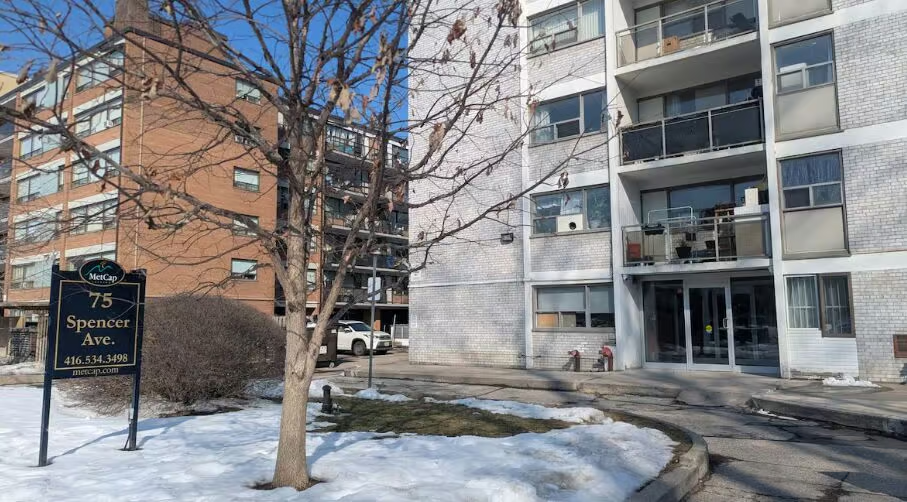
A six-month rent strike at a Toronto apartment building has ended after the landlord withdrew an application seeking an above-guideline rent increase.
The dispute involved 75 Spencer Avenue in Parkdale, where tenants began withholding rent in March 2026 after the landlord sought a retroactive rent increase for 2025.
Ontario’s 2025 rent increase guideline was 2.5%. The landlord was seeking an additional 2.9% above-guideline increase, bringing the proposed total increase to approximately:
5.4%.
About 30 rental units participated in the rent strike, according to reporting by TorontoToday and The Canadian Press. After approximately six months, and after the property changed ownership during the dispute, the above-guideline increase application was withdrawn. Tenant organizers described the outcome as a victory and said participating tenants would repay the rent they had withheld.
The story has attracted attention because it touches on several issues Ontario landlords regularly face:
- major building improvements;
- above-guideline rent increases;
- tenant opposition;
- maintenance complaints;
- rent withholding;
- and the financial consequences of a dispute that lasts months.
But there is one important point to establish immediately:
The LTB did not rule that the landlord’s AGI application was invalid.
The application was withdrawn before the Landlord and Tenant Board decided its merits. So this case should not be interpreted as a new legal precedent saying that landlords cannot seek similar increases.
Instead, it is a useful example of how an otherwise lawful LTB process can become a much larger property-management dispute.
What Happened at 75 Spencer Avenue?
The dispute began after the former landlord sought an Above-Guideline Increase, commonly referred to as an AGI, for work performed at the Parkdale apartment building.
The proposed 2025 increase consisted of the normal 2.5% guideline increase plus an additional 2.9%, bringing the total proposed increase to 5.4%.
Tenants objected.
They told reporters that some of the work included renovations to the lobby and the conversion of an office into another rental unit. Some tenants also raised concerns about conditions inside their own units and argued that the expenditures should not justify increasing their rents. The former property manager disputed the suggestion that repair requests were being ignored and said the company believed the work qualified under Ontario’s AGI system.
In March, tenants in roughly 30 units began withholding rent.
Several months later, ownership of the building changed. After continued tenant organizing, the new owner ultimately withdrew the AGI application in September.
The withdrawal ended the immediate dispute over the proposed increase.
But for Ontario landlords, the more useful question is:
How does an AGI actually work, and how can landlords reduce the risk of a similar dispute?
First: What Is an Above-Guideline Increase?
Ontario normally limits annual rent increases for rent-controlled units to the province’s annual guideline.
However, the Residential Tenancies Act allows a landlord to apply to the LTB for permission to increase rent beyond that guideline in certain circumstances.
A landlord can currently file an L5 Application for a Rent Increase Above the Guideline for qualifying reasons including:
- an extraordinary increase in municipal taxes and charges;
- eligible capital expenditures;
- certain increased or new security-service operating costs.
For many landlords, the most relevant category is:
capital expenditures.
These may include significant renovations, repairs, replacements or additions that meet the legal criteria.
But simply spending a large amount of money on a building does not automatically make the expense eligible for an AGI.
Not Every Renovation Qualifies
This is probably the biggest practical lesson from the Spencer Avenue dispute.
The LTB defines a capital expenditure as an extraordinary or significant renovation, repair, replacement or new addition with an expected benefit of at least five years.
But the LTB specifically excludes:
- ordinary work;
- routine maintenance;
- substantially cosmetic work;
- work mainly intended to enhance the prestige or luxury of the property.
Eligible expenditures generally need to satisfy additional requirements, such as being necessary to protect or restore the physical integrity of the property, maintain major building systems, improve accessibility, conserve energy or water, or improve security.
So before a landlord thinks:
“I spent $150,000 upgrading the building, so I can recover part of it through an AGI,”
the better question is:
“Which specific expenses actually qualify under the RTA?”
A beautiful new lobby and a necessary replacement of a failing boiler are not automatically treated the same way.
The amount spent is not the only issue.
The purpose and nature of the work matter.
The LTB Decides Whether the Costs Qualify
An AGI is an application, not automatic permission to charge the increase.
The landlord needs to file the L5 application and provide supporting documentation. The LTB then determines whether the claimed expenditures meet the statutory requirements and how much, if any, increase should be approved.
Supporting evidence can become extremely important.
Landlords dealing with capital expenditures should be prepared to organize records such as:
- invoices;
- contracts;
- proof of payment;
- description of the work;
- completion dates;
- information about grants or insurance proceeds;
- and documents supporting why replacement or repair was necessary.
An expensive project with weak documentation can create a much more difficult application than a well-documented project with a clear legal basis.
How Much Can an AGI Add to the Rent?
For AGIs based on capital expenditures or qualifying security-service costs, the increase is generally limited to:
up to 3% above the guideline in a single year.
If the approved amount would justify more than 3%, the remaining increase can be phased in over the following two years, with up to 3% above the guideline in each year.
Different rules apply to increases based on extraordinary municipal taxes and charges.
That is how a tenant can potentially face an annual increase that is meaningfully higher than the normal guideline.
In the Spencer Avenue case, the requested additional increase was 2.9% on top of Ontario’s 2.5% guideline for 2025.
But again:
requested does not mean approved.
Until the LTB issues an order, the additional AGI portion remains subject to the application.
Do Tenants Have to Pay the Proposed AGI Before the LTB Approves It?
This is an especially important distinction.
If a landlord has filed an AGI and given the required rent-increase notice, Ontario law generally does not allow the landlord to force the tenant to pay the unapproved above-guideline portion while the application is still pending.
Until the LTB order takes effect, the landlord generally cannot require rent above the amount that could lawfully be charged without the AGI.
The tenant can choose to pay the full proposed amount while waiting for the decision. If the LTB later approves less than that amount, the landlord would owe the excess back to the tenant.
So a tenant who disputes an AGI does not necessarily need to stop paying all rent in order to avoid paying the unapproved portion.
This is very different from a rent strike where tenants withhold their entire monthly rent.
Does the Toronto Case Mean Tenants Can Simply Stop Paying Rent?
No.
This particular dispute ended with the landlord withdrawing the AGI and tenants indicating that the withheld rent would be repaid.
That does not create a general legal right for Ontario tenants to stop paying their regular lawful rent whenever they disagree with a landlord.
Failure to pay lawful rent can expose a tenant to the non-payment process, including an N4 notice and potentially an L1 application.
And since September 21, 2026, the N4 notice period for notices served on or after that date has been shortened from 14 days to:
7 days.
Ontario law does provide specific situations where tenants may have rights concerning rent payments, but a disagreement over an AGI should not be confused with a general permission to stop paying rent altogether.
This distinction matters for both landlords and tenants.
A Pending AGI Can Create a Large Retroactive Balance
One reason AGI disputes can become stressful is timing.
The LTB process may take time.
If tenants choose not to pay the proposed above-guideline portion while an application is pending and the LTB later approves some or all of the increase, they can end up owing the approved difference retroactively.
For example, imagine the lawful rent is:
$2,000/month
The landlord gives notice of the normal guideline increase plus a proposed AGI.
The tenant pays only the lawful amount that does not depend on the AGI while waiting.
If the LTB later approves an additional increase that applies retroactively to the effective date, the tenant may then owe the difference accumulated over those months.
That can become a sizeable amount.
For landlords, this is another reason clear communication matters.
Tenants should understand that:
“You don’t have to pay the unapproved portion today”
is not necessarily the same as:
“You will never owe it.”
The final amount depends on the LTB order.
Maintenance Problems Can Complicate an AGI Application
The Spencer Avenue tenants publicly raised concerns about maintenance conditions in their building while challenging the proposed increase. The former property manager said it was unaware of outstanding repair requests that were not being addressed.
The specifics of those competing claims were not finally determined by the LTB because the AGI application was withdrawn.
But there is a broader landlord lesson here.
The LTB’s own guidance notes that serious maintenance problems can matter in an AGI proceeding. In some circumstances, the Board may dismiss an application or require problems to be corrected before an approved increase can be charged.
So landlords considering an AGI should not treat:
capital improvements
and
routine property maintenance
as unrelated issues.
Spending money on a major building project does not remove the landlord’s continuing obligation to properly maintain the rental property.
The Bigger Lesson: Legal Compliance Is Only Part of Property Management
An AGI may be legally available.
But filing an application does not guarantee tenants will accept it quietly.
The Spencer Avenue situation escalated from a rent-increase application into:
- a coordinated rent strike;
- public tenant organizing;
- media coverage;
- ongoing landlord-tenant conflict;
- a change in building ownership;
- and ultimately withdrawal of the application.
That does not mean landlords should avoid legitimate AGI applications.
If a landlord has incurred significant eligible expenses, the AGI process exists for a reason.
But the case does demonstrate something property owners sometimes overlook:
A legally available option can still become a difficult management issue if tenants do not understand the costs, the work, or the reason for the increase.
Documentation matters.
Communication matters.
And the condition of the rest of the building matters.
Before Filing an AGI, Ask These Questions
A landlord considering an L5 application should ideally answer several questions before filing.
Is the work actually eligible?
Do not assume every renovation or improvement qualifies.
Routine maintenance and substantially cosmetic work are generally excluded.
Do you have complete records?
Keep invoices, contracts, proof of payment and clear descriptions of the work.
Was the work completed within the required period?
Capital expenditures are subject to timing rules. The LTB says qualifying work generally must fall within the prescribed expenditure period connected to the first effective date of the requested increase.
Are there unresolved maintenance problems?
Do not spend heavily on visible improvements while allowing basic tenant repair requests to accumulate.
Can you explain the work clearly to tenants?
Even where there is disagreement, transparent communication can reduce confusion.
Have you calculated the increase correctly?
An AGI is not simply:
“Project cost ÷ number of tenants.”
The LTB applies statutory formulas and unit-by-unit allocation rules when calculating allowable capital-expenditure increases.
Are you prepared for the process to take time?
An AGI may involve document production, tenant responses, case management and a hearing.
Build that into your expectations.
What Should a Landlord Do If Tenants Start Withholding Rent?
Do not respond emotionally.
And do not immediately assume that because tenants are protesting an AGI, every dollar they are withholding is legally protected.
First determine:
What amount is actually unpaid?
Separate:
- lawful regular rent;
- normal guideline increase;
- proposed but not-yet-approved AGI;
- previous arrears;
- other lawful adjustments.
Your rent ledger needs to be precise.
If lawful rent has not been paid, landlords should review the appropriate current LTB process rather than relying on informal threats or changing locks.
Since the September 21 changes, landlords also need to make sure they are using the current N4 form and current seven-day timeline where applicable.
For a large building or coordinated rent dispute, obtaining legal advice may also be appropriate.
Don’t Let the Rent Ledger Become Part of the Problem
Imagine 30 tenants are involved in a dispute.
Some continue paying normal lawful rent.
Some pay the proposed increase.
Some withhold only the disputed amount.
Some stop paying completely.
If the property manager does not keep accurate records, the accounting can become extremely complicated very quickly.
For every unit, landlords should be able to identify:
- lawful monthly rent;
- amount due;
- amount received;
- payment date;
- amount outstanding;
- whether any amount relates to a pending AGI;
- any payment plan or settlement.
This is not just bookkeeping.
It can become evidence.
Should Landlords Avoid AGIs After This Toronto Case?
No.
That would be the wrong conclusion.
Ontario specifically provides an AGI process for qualifying expenditures and certain other costs.
Buildings need major repairs.
Mechanical systems need replacement.
Accessibility and energy-efficiency upgrades may be necessary.
Security costs may increase.
Municipal taxes can rise significantly.
The AGI framework exists because some extraordinary property costs cannot reasonably be treated the same way as routine annual expenses.
The better conclusion from the Spencer Avenue case is:
Don’t treat an AGI like a routine annual rent increase.
It requires more preparation.
The financial records need to be stronger.
The legal basis needs to be clear.
Tenant communication matters more.
And landlords need to be prepared for tenants to scrutinize the claimed expenses.
Topromanage Perspective
The Parkdale rent strike is a good reminder that property management is not just about knowing which LTB form to use.
A landlord can have:
- a major renovation,
- an AGI application,
- a tenant dispute,
- unpaid rent,
- maintenance complaints
all happening at the same time.
When that happens, small administrative mistakes can quickly become much larger problems.
For landlords considering an AGI, we believe the process should begin before the L5 is filed.
Start with the property records.
Review the work.
Separate capital improvements from routine maintenance.
Organize invoices and payment records.
Review outstanding tenant issues.
Make sure the rent ledger is accurate.
And think carefully about how the proposed increase will be communicated.
At Topromanage, we help Toronto and GTA landlords manage tenant communication, rent records, maintenance coordination, inspections and day-to-day rental-property operations.
An AGI may be a legal process.
But how the property is managed before, during and after that application can make a major difference.
Frequently Asked Questions
What happened in the Toronto rent strike at 75 Spencer Avenue?
Tenants began withholding rent in March 2026 after the landlord sought a 5.4% total rent increase for 2025, including a 2.9% above-guideline component. After approximately six months, the AGI application was withdrawn. Tenant organizers said the withheld rent would then be repaid.
Did the LTB rule that the 5.4% increase was illegal?
No. The application was withdrawn, so the LTB did not issue a decision determining whether the claimed increase should have been approved.
Can Ontario landlords legally apply for rent increases above the guideline?
Yes. The RTA permits AGI applications for qualifying capital expenditures, extraordinary municipal tax and charge increases, and certain security-service costs.
Does every renovation qualify for an AGI?
No. Routine maintenance, ordinary work and substantially cosmetic or prestige-related improvements are generally excluded.
Does a tenant have to pay the proposed AGI while the application is still pending?
A landlord generally cannot require payment of the unapproved above-guideline portion before the LTB order takes effect. A tenant may voluntarily pay the proposed amount, subject to adjustment after the LTB decision.
Can a tenant simply stop paying all rent because they disagree with an AGI?
The Spencer Avenue outcome does not create a general right to stop paying lawful rent. Failure to pay lawful rent can lead to the N4/L1 non-payment process.
What is the current N4 notice period?
For N4 notices given on or after September 21, 2026, the notice period has been reduced from 14 days to 7 days.
The Bottom Line
The most important lesson from the Parkdale rent strike is not:
“Landlords should never apply for an AGI.”
And it is not:
“Tenants can stop paying rent whenever they disagree with an increase.”
Neither conclusion reflects how Ontario’s rental rules actually work.
The better lesson is:
An AGI needs to be treated as a serious property-management process, not just another rent-increase form.
Before filing:
make sure the expenditure qualifies;
organize your evidence;
keep maintenance up to date;
communicate clearly with tenants;
and keep accurate rent records.
The 75 Spencer Avenue application was ultimately withdrawn before the LTB ruled on whether the claimed expenditures justified the proposed increase.
But the six-month dispute shows how quickly a rent-increase application can expand into a much larger landlord-tenant conflict.
For Ontario landlords, good documentation and good property management are often just as important as knowing which form to file.
If you own a rental property in Toronto or the GTA and need help keeping tenant communication, maintenance and rent records organized, contact Topromanage.
Source: CBC

The Topromanage Experience
Discover decades of industry expertise that covers all of the GTA and Southern Ontario.



Scan A QR Code to Connect With Us
WeChat
WhatsApp