
July 27, 2026 | Blog
Ontario Is Making LTB Orders Easier to Find: What Every Landlord Should Know
The Ontario Landlord and Tenant Board (LTB) has announced a significant change that could affect both landlords and tenants.
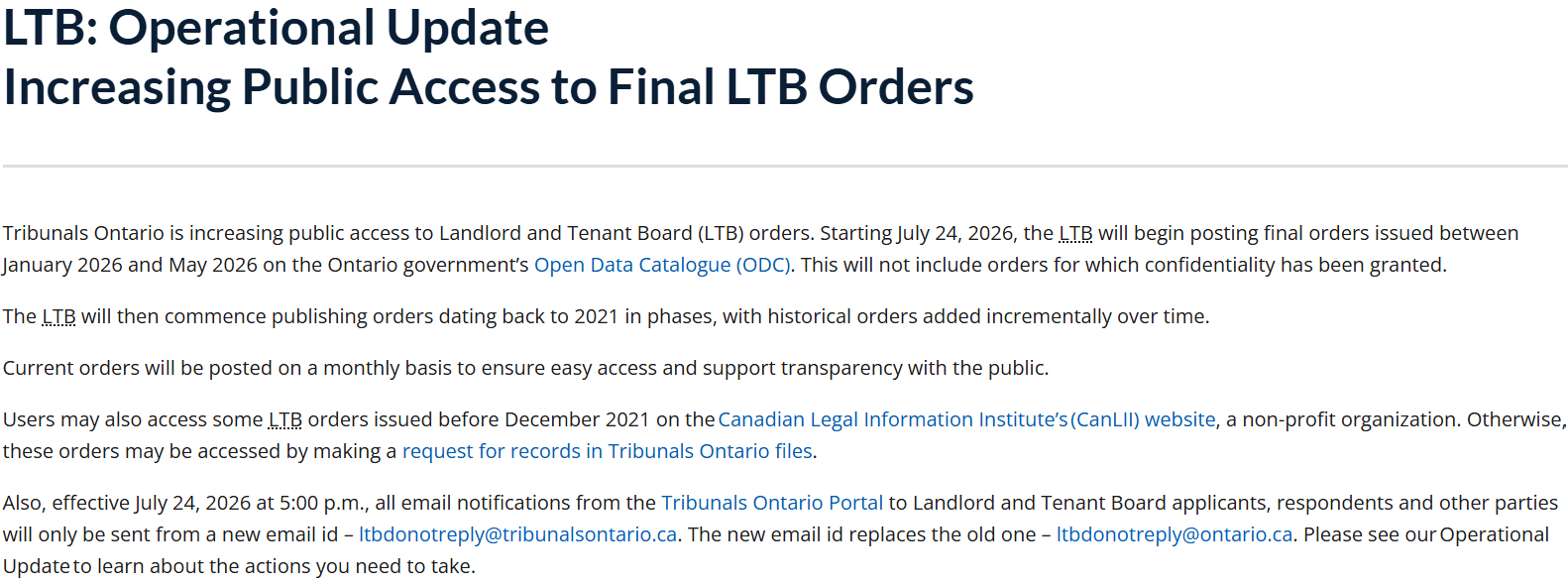
Beginning July 24, 2026, the LTB is expanding public access to its final decisions by publishing more orders through the Ontario government’s Open Data Catalogue. Initially, final orders issued between January and May 2026 will be uploaded, with older decisions dating back to 2021 being added in phases. New final orders will also be published on a monthly basis. Orders that have been granted confidentiality will not be included.
While LTB decisions have always been public records, this update makes them much easier for the public to access.
So what does this actually mean for Ontario landlords?
Weren’t LTB Orders Already Public?
Yes—but not as accessible.
Previously, many people relied on CanLII or requested records directly from Tribunals Ontario. Only a portion of decisions were easy to find online, while others required additional steps to obtain.
With this new update, the LTB is creating a more centralized and consistent way for the public to access final decisions.
In other words, the information isn’t becoming public for the first time—it’s becoming easier to find.
Why Is Ontario Doing This?
According to Tribunals Ontario, the goal is to improve public access and transparency.
Making final orders available through the Ontario Open Data Catalogue allows landlords, tenants, legal professionals and the public to better understand how the LTB applies Ontario’s Residential Tenancies Act.
Greater transparency can also help people understand previous decisions and how similar cases have been handled.
What Orders Will Be Published?
The LTB has confirmed that:
- Final orders issued between January and May 2026 are being published first.
- Historical orders dating back to 2021 will be added in phases.
- New final orders will continue to be published every month.
- Orders subject to a confidentiality order will not be published.
What Does This Mean for Landlords?
For landlords, this change reinforces the importance of handling every LTB application professionally.
Whether your application involves:
- Non-payment of rent
- Persistent late rent
- Personal use
- Renovation
- Maintenance disputes
- Any other tenancy matter
your final order may now be easier for others to locate if it is published.
This doesn’t mean landlords should avoid using the LTB. Instead, it highlights the importance of:
- Keeping complete records
- Using the correct forms
- Following legal procedures
- Providing clear evidence
- Maintaining professional communication
A well-documented case has always mattered—and it matters even more when decisions are easier to access.
What About Tenants?
This update affects both landlords and tenants.
Because more final orders will be available publicly, both parties should understand that an LTB hearing is part of a legal process, and the resulting decision may become easier to locate unless a confidentiality order applies.
The update does not create a new category of public information—it changes how accessible existing public decisions are.
Does This Replace CanLII?
Not entirely.
Some older LTB decisions issued before December 2021 are already available through CanLII, while the new Open Data Catalogue will become the primary source for newly published final orders and historical decisions being released by the LTB.
What Should Landlords Do Going Forward?
This update is a good reminder to treat every tenancy file as though it could one day be reviewed by others.
Good practices include:
- Keep detailed rent records.
- Save emails, text messages and notices.
- Use the correct LTB forms.
- File applications promptly.
- Organize photos, invoices and supporting documents.
- Attend hearings fully prepared.
- Follow every step required under the Residential Tenancies Act.
Strong documentation protects everyone involved and helps present a clear picture if a dispute reaches the LTB.
Topromanage’s Perspective
This update isn’t about making it harder for landlords or tenants.
It’s about making Ontario’s rental dispute process more transparent.
For landlords, the takeaway is simple:
Good documentation and proper procedures have never been more important.
Whether you’re serving an N4, responding to a maintenance issue or preparing for an LTB hearing, organized records and compliance with Ontario’s rental laws remain your best protection.
At Topro Management, we believe proactive property management starts long before an LTB application is ever filed.
Final Thoughts
The LTB’s decision to expand public access to final orders marks another step toward greater transparency in Ontario’s rental system. While final decisions have long been public records, they will now be easier to locate through a centralized government platform.
For landlords, this is a timely reminder that every tenancy should be managed with professionalism, clear communication and thorough documentation. These practices not only help resolve disputes but also ensure you’re well prepared if a matter ever reaches the LTB.
Source: Tribunals Ontario

The Topromanage Experience
Discover decades of industry expertise that covers all of the GTA and Southern Ontario.



Scan A QR Code to Connect With Us
WeChat
WhatsApp