
June 26, 2026 | Blog
Ontario 2027 Rent Increase Guideline|What GTA Landlords Need to Know Before Raising Rent
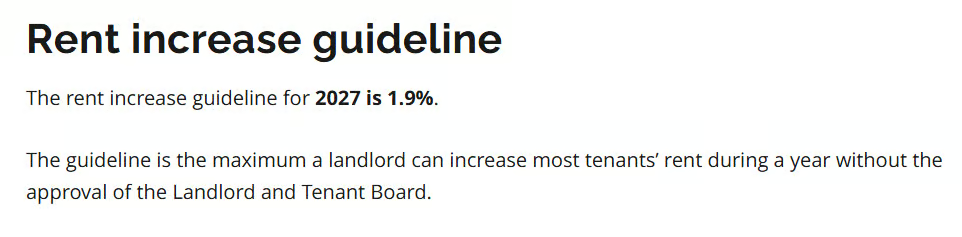
Ontario has officially announced that the 2027 rent increase guideline is 1.9%.
For landlords across Toronto and the GTA, this number is an important benchmark. It represents the maximum annual rent increase that most rent-controlled residential units can receive in 2027 without applying for approval from the Landlord and Tenant Board.
However, there is one common misconception.
A 1.9% guideline does not mean landlords can automatically increase rent or raise rent whenever they choose.
Before increasing rent, landlords must still comply with Ontario’s Residential Tenancies Act, including the timing requirements, notice period, rent control rules, and other legal procedures.
Knowing the percentage is only the first step. Understanding the entire process is what helps landlords stay compliant and avoid unnecessary disputes.
What Is the 2027 Rent Increase Guideline?
Each year, Ontario establishes a rent increase guideline based on a formula set out in provincial legislation.
The guideline determines the maximum amount that most landlords can increase rent for rent-controlled residential units without seeking approval from the Landlord and Tenant Board.
For 2027, the guideline has been set at 1.9%.
For example:
If the current monthly rent is $2,500:
- A 1.9% increase equals $47.50.
- The new monthly rent would be $2,547.50.
If the current monthly rent is $3,000:
- A 1.9% increase equals $57.00.
- The new monthly rent would be $3,057.00.
Even if the increase falls within the guideline, landlords must still provide proper written notice before the increase takes effect.
Without following the required process, the rent increase may not be legally enforceable.
Why Has the Rent Increase Guideline Been Getting Lower?
Many landlords have noticed that Ontario’s rent increase guideline has gradually decreased over the past few years:
- 2025: 2.5%
- 2026: 2.1%
- 2027: 1.9%
Naturally, many landlords are asking the same question:
If operating costs keep rising, why is the allowable rent increase getting smaller?
The answer is that the rent increase guideline is not based on landlords’ operating costs.
Instead, it is calculated using a formula established under Ontario legislation, which primarily considers the Ontario Consumer Price Index (CPI), subject to a statutory maximum.
For landlords, however, reality often looks very different.
Many property owners continue to face:
- Higher mortgage payments;
- Increasing property taxes;
- Rising insurance premiums;
- Higher condominium maintenance fees;
- More expensive repairs and maintenance;
- Increasing contractor and labour costs.
Simply put, many landlords are seeing their expenses rise much faster than the annual rent increase guideline.
As a result, owning rental property has become increasingly challenging from a cash flow perspective.
When Can Landlords Increase Rent?
Ontario landlords cannot increase rent simply because a new guideline has been announced.
In most situations, rent can only be increased if at least 12 months have passed since:
- The tenant first moved into the unit; or
- The previous lawful rent increase took effect.
This is one of the most important rules under Ontario’s Residential Tenancies Act.
Even though the 2027 guideline has been announced, landlords must still wait until they meet the 12-month requirement before increasing rent.
Landlords Must Provide 90 Days’ Written Notice
Before a rent increase takes effect, landlords must provide tenants with proper written notice.
For most residential tenancies, landlords must give at least 90 days’ written notice.
The notice should clearly include:
- The current rent;
- The new rent;
- The amount of the increase;
- The effective date.
Using the correct notice form and ensuring all information is accurate is essential.
Incorrect forms, incomplete information, or insufficient notice periods can make the rent increase invalid.
Which Rental Units Are Covered by Rent Control?
The 1.9% guideline applies to most rent-controlled residential rental units.
However, not every rental property falls under rent control.
For example, many residential units that were first occupied for residential purposes after November 15, 2018, are exempt from Ontario’s annual rent increase guideline.
These units may allow landlords greater flexibility when adjusting rent.
However, even exempt units must still comply with the basic rules regarding:
- The 12-month interval between rent increases;
- Proper written notice.
Before increasing rent, landlords should always confirm whether their property is subject to rent control.
Can Landlords Reset Rent After a Tenant Moves Out?
Yes.
Ontario’s annual rent increase guideline generally applies only during an existing tenancy.
When a tenant moves out and the unit becomes vacant, landlords can generally establish a new market rent for the next tenant.
This explains why the rent for the same property may increase significantly between tenancies.
However, once the new tenancy begins, future rent increases must follow the rules applicable to that rental unit.
Setting the right rent at the beginning of a new lease is therefore an important long-term financial decision.
Can Landlords Increase Rent Above 1.9%?
In certain situations, landlords may apply for an Above Guideline Increase.
However, landlords cannot simply choose to increase rent beyond the guideline.
Applications must be submitted to the Landlord and Tenant Board and approved before a higher increase can take effect.
Examples may include:
- Eligible capital expenditures;
- Certain significant increases in municipal taxes and charges;
- Eligible security-related improvements.
Because these applications require supporting documentation, landlords should carefully retain invoices, receipts, contractor reports, and all relevant records.
Common Rent Increase Mistakes Landlords Make
Many rent increase disputes are caused by procedural mistakes rather than the increase itself.
Some of the most common mistakes include:
- Increasing rent before 12 months have passed;
- Giving less than 90 days’ notice;
- Using the wrong notice form;
- Miscalculating the rent increase;
- Applying the wrong year’s guideline;
- Assuming every property is rent-controlled;
- Failing to keep proof that notice was delivered.
These mistakes may seem minor but can invalidate a rent increase and create unnecessary disputes.
For Many Landlords, 1.9% Isn’t the Biggest Challenge
Many landlords immediately focus on the 1.9% guideline.
In reality, however, the biggest challenge is often something else.
Long-Term Tenancies Can Fall Well Below Market Rent
Because annual rent increases are limited for rent-controlled units, the longer a tenant remains in the property, the larger the gap between the current rent and today’s market rent may become.
Even landlords who increase rent every year according to the guideline may eventually find themselves charging hundreds of dollars below market rent.
Over time, this can significantly affect cash flow and the overall return on investment.
Managing Rental Risk Is Often More Important Than the Annual Increase
For many landlords, rent increases are only one part of the equation.
The larger concern is often rental risk.
A problematic tenancy involving unpaid rent, lease violations, or lengthy legal proceedings can have a far greater financial impact than the difference between a 1.9% and a 2.5% rent increase.
Ontario has introduced several measures in recent years to improve the efficiency of the Landlord and Tenant Board, but resolving disputes can still take considerable time.
At the same time, responsible tenants also benefit from a stable and well-managed rental environment.
Ultimately, careful tenant screening, thorough documentation, and proactive property management often have a much greater impact on long-term success than the annual rent increase percentage.
Documentation Matters
Every rent increase should be supported by complete records.
Landlords should keep:
- The lease agreement;
- Rent payment history;
- Copies of rent increase notices;
- Proof of service;
- Communication records with tenants;
- Updated rent ledgers;
- Maintenance and repair records.
Many rental disputes arise not because of the rent increase itself, but because proper documentation is missing.
Good documentation protects landlords and helps demonstrate compliance if questions arise later.
How Professional Property Management Helps
Rent increases are only one part of successful rental property management.
A professional property management company can help landlords:
- Track rent increase eligibility dates;
- Prepare compliant notices;
- Maintain complete documentation;
- Communicate professionally with tenants;
- Coordinate maintenance;
- Monitor lease compliance;
- Reduce the likelihood of disputes.
For landlords managing multiple properties—or simply busy with other responsibilities—professional management can significantly reduce administrative burden and legal risk.
Why More GTA Landlords Choose Property Management
Topromanage provides comprehensive property management services across Toronto and the GTA.
Our services include:
- Tenant screening;
- Lease administration;
- Rent collection;
- Rent increase scheduling;
- Notice preparation;
- Documentation management;
- Maintenance coordination;
- Tenant communication;
- Ongoing risk management.
We believe successful property management is about much more than collecting rent.
It is about protecting your investment through professional, compliant, and proactive management.
Topromanage|Helping Landlords Stay Compliant and Protect Their Investment
Ontario’s rental regulations continue to evolve.
For landlords, staying compliant is just as important as maximizing rental income.
At Topromanage, we help landlords build standardized management processes, reduce legal risks, and improve the long-term performance of their rental properties.
From rent increases and tenant communication to documentation and maintenance coordination, we help landlords manage their investments with confidence.
Final Thoughts
Ontario’s 2027 rent increase guideline has been set at 1.9%.
For most rent-controlled residential units, this represents the maximum annual increase that can be applied without seeking additional approval.
However, the percentage itself is only part of the story.
As allowable rent increases continue to decline while ownership costs continue to rise, successful rental property ownership depends more than ever on:
- Careful tenant selection;
- Proper documentation;
- Strong property management practices;
- Reducing rental risk;
- Building stable, long-term tenancies.
For landlords planning to hold rental properties over the long term, professional management and proactive planning will often have a far greater impact than the annual rent increase guideline alone.

The Topromanage Experience
Discover decades of industry expertise that covers all of the GTA and Southern Ontario.



Scan A QR Code to Connect With Us
WeChat
WhatsApp