
June 29, 2026 | Blog
More Purpose-Built Rentals Are Entering the Market|Should GTA Condo Landlords Be Worried?
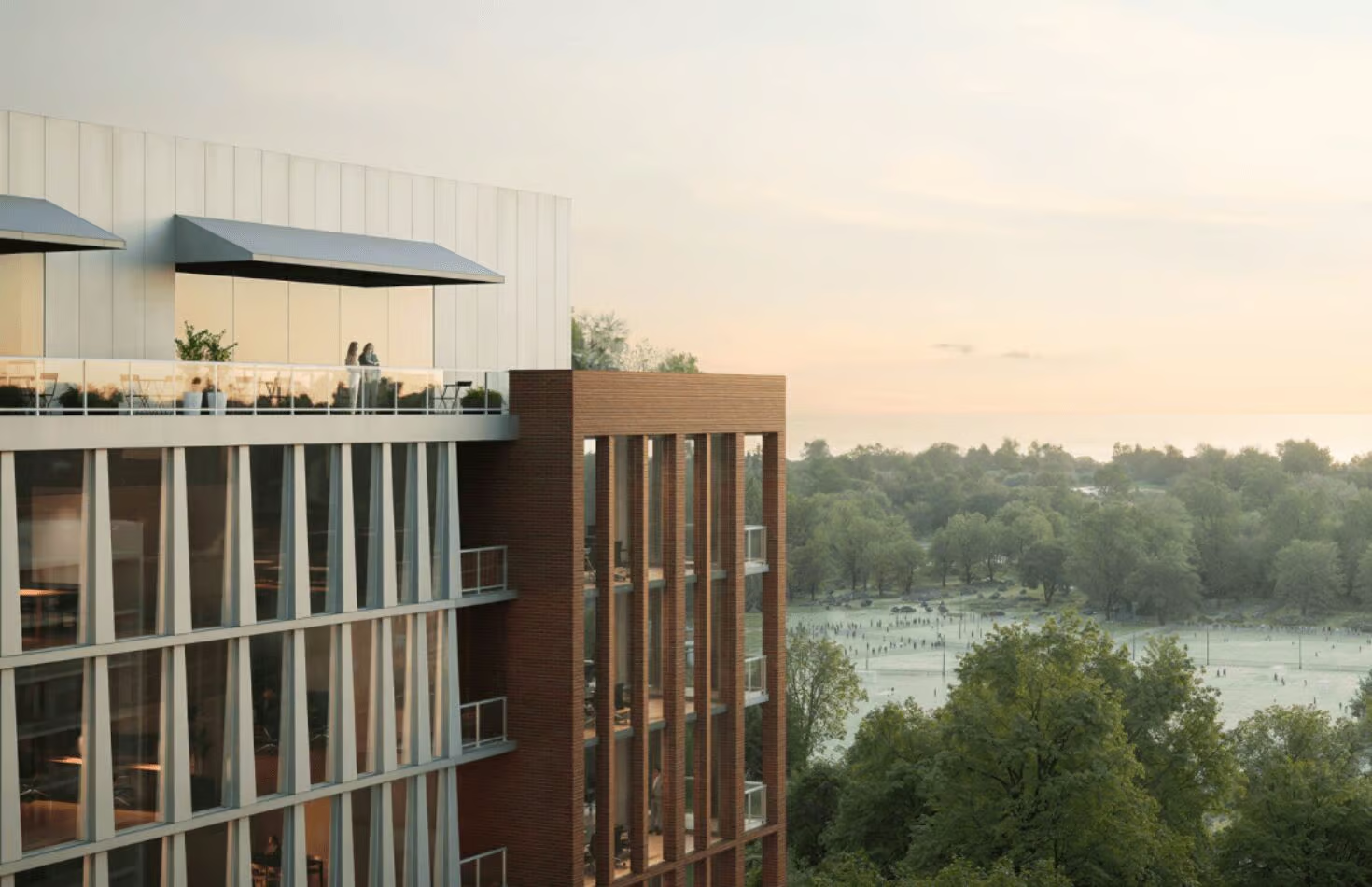
Over the past few years, more purpose-built rental buildings have entered the market. These are apartment buildings designed specifically for rental use, often managed by professional operators and equipped with modern amenities such as gyms, lounges, co-working spaces, pet-friendly features, and on-site management.
At the same time, rental vacancy has started to rise.
According to Urbanation, the vacancy rate in stabilized purpose-built rental buildings completed since 2000 in the Greater Toronto and Hamilton Area reached 5.4% in Q1 2026, up from 3.6% one year earlier and 2.6% two years earlier. This was the highest level since Q1 2021, when vacancy reached 6.3%.
For many condo landlords, this raises an important question:
Will it become harder to rent out investment condos in the GTA?
The honest answer is yes, competition is increasing.
But the impact will not be the same for every property.
What Are Purpose-Built Rentals?
A purpose-built rental is a residential building designed and operated specifically for long-term rental housing.
Unlike individually owned condos, where each unit may be owned by a different investor, purpose-built rental buildings are usually operated by one company or institution.
This means tenants may receive:
- Centralized leasing;
- Professional on-site management;
- Modern amenities;
- Consistent maintenance standards;
- Flexible leasing promotions;
- A more standardized rental experience.
For tenants comparing options, these buildings can be very attractive.
This is why traditional condo landlords now face more competition than before.
Why Are Purpose-Built Rentals Becoming More Competitive?
Purpose-built rental buildings have several advantages.
Many newer projects offer:
- Fitness centres;
- Shared workspaces;
- Parcel rooms;
- Pet amenities;
- Social lounges;
- Professional property management;
- Move-in promotions.
Some buildings may also offer incentives such as free rent periods or reduced deposits when vacancy rises.
This can make them appealing to renters who want convenience, professional management, and modern amenities.
For individual condo landlords, this means rental listings must now compete not only with other condos, but also with professionally operated rental buildings.
Does This Mean Condo Rentals Are No Longer Attractive?
Not necessarily.
Condo rentals still have strong advantages, especially in good locations.
Many tenants continue to prefer condos because they often offer:
- Better layouts;
- Newer finishes;
- Better views;
- More privacy;
- Better building locations;
- Access to established condo amenities;
- Proximity to offices, universities, hospitals, and transit.
In downtown Toronto, many tenants still prioritize convenience above everything else.
If a condo is close to subway stations, employment hubs, schools, hospitals, or major lifestyle amenities, it can still remain highly competitive.
The key is no longer simply listing the unit and waiting.
The key is positioning the property properly.
Downtown Locations Remain More Resilient
Not all rental markets perform the same way.
Downtown Toronto remains one of the strongest rental markets because demand comes from multiple sources, including:
- Financial district employees;
- Technology workers;
- University students;
- Hospital and healthcare workers;
- New immigrants;
- Temporary professionals;
- People relocating for work.
This demand is relatively diverse and consistent.
Core downtown locations also have limited available land for future development, which naturally restricts long-term supply growth.
For this reason, well-located downtown condos generally have stronger long-term resilience than units in areas with weaker transit access or limited employment demand.
Which Condo Units Will Face More Pressure?
As rental supply increases, not every unit will perform equally.
The properties that may face greater pressure include:
- Units far from subway or major transit;
- Older buildings with fewer amenities;
- Poorly maintained units;
- Inefficient floor plans;
- Buildings with many similar units listed at the same time;
- Units priced above market;
- Properties with high carrying costs and limited tenant appeal.
In a more competitive market, tenants have more choices.
That means they are less likely to accept a poorly presented or overpriced unit.
Which Condo Units Are Still Easier to Rent?
On the other hand, certain properties remain more attractive.
These usually include units with:
- Strong transit access;
- Practical floor plans;
- Good natural light;
- Modern finishes;
- Clean and well-maintained interiors;
- Reasonable pricing;
- Strong building amenities;
- Proximity to employment, schools, or hospitals.
A good unit in a strong location can still lease successfully, even when competition increases.
The difference is that landlords may need to be more strategic with pricing, presentation, and timing.
Examples: Core Downtown and Transit-Oriented Locations
Take a core downtown address such as 481 University Avenue as an example.
A location like this benefits from being close to major employment districts, hospitals, universities, subway access, and downtown amenities.
That kind of location tends to have stronger long-term rental demand because tenants are not only renting a unit.
They are renting convenience.
Transit-oriented communities such as UnionCity can also have long-term rental appeal because many tenants value easy commuting, newer housing, and access to growing urban infrastructure.
The key lesson is clear:
Location still matters.
Even as rental supply increases, properties with strong accessibility and practical tenant demand are usually better positioned.
Short-Term Competition vs. Long-Term Demand
In the short term, the GTA rental market may become more competitive.
Over the next one to three years, landlords may face:
- Slower rent growth;
- More competing listings;
- More tenant negotiation;
- More pressure to price accurately;
- Longer leasing timelines in some areas.
However, the long-term picture is more balanced.
Urbanation has also projected that the GTA could face a large rental supply deficit over the next decade, as rental demand continues to grow and future rental supply may not keep up.
This means the current softening may be a temporary adjustment rather than a permanent collapse in rental demand.
For landlords, the message is not panic.
The message is preparation.
Pricing Strategy Matters More Than Before
In a tighter rental market, landlords could sometimes list aggressively and still find tenants quickly.
That environment is changing.
Today, pricing must be realistic.
If a unit is priced too high, tenants may simply choose a newer purpose-built rental building or another condo nearby.
A good pricing strategy should consider:
- Current comparable listings;
- Recent leased prices;
- Building condition;
- Unit layout;
- Included parking or locker;
- Transit access;
- Competing rental buildings nearby.
The goal is not always to get the highest possible asking rent.
The goal is to minimize vacancy while securing a qualified tenant.
Presentation Also Matters
When competition increases, presentation becomes more important.
Landlords should make sure the unit is:
- Clean;
- Well-lit;
- Properly photographed;
- Repaired before showing;
- Free from obvious maintenance issues;
- Clearly described in the listing.
Small details can make a large difference.
A well-maintained unit often attracts better tenant interest and may reduce vacancy time.
Tenant Screening Is Still Essential
In a softer rental market, landlords may feel pressure to accept the first applicant.
That can be risky.
Even when vacancy is rising, proper tenant screening remains essential.
Landlords should still review:
- Employment and income stability;
- Credit history;
- Rental history;
- References;
- Communication habits;
- Completeness of application materials.
A quick rental is not always a successful rental.
The right tenant matters more than the fastest tenant.
Property Management Is Becoming More Important
As rental competition increases, property management becomes more important.
Professional management helps landlords:
- Price units correctly;
- Market listings effectively;
- Screen tenants carefully;
- Reduce vacancy risk;
- Coordinate repairs quickly;
- Maintain proper documentation;
- Communicate with tenants professionally;
- Protect long-term rental income.
In today’s market, renting out a condo is no longer just about posting a listing online.
It requires strategy, timing, and consistent management.
Why More GTA Landlords Choose Topromanage
Topromanage helps landlords across Toronto and the GTA manage rental properties with confidence.
Our services include:
- Rental pricing strategy;
- Tenant screening;
- Listing preparation;
- Lease management;
- Rent collection tracking;
- Maintenance coordination;
- Tenant communication;
- Documentation management;
- Ongoing property management.
As the rental market becomes more competitive, professional management can help landlords reduce vacancy, avoid risky tenants, and protect long-term property value.
Final Thoughts
The rise of purpose-built rental supply is changing the GTA rental market.
For condo landlords, competition is becoming stronger, especially in areas with more new rental projects and more similar listings.
However, this does not mean condo rentals are losing their value.
Well-located, well-maintained, properly priced units can still perform strongly, especially in downtown and transit-oriented communities.
The market is simply becoming more selective.
For landlords, the key is no longer relying on past rental conditions.
The key is understanding today’s market, pricing strategically, maintaining the unit properly, and choosing tenants carefully.
In a more competitive rental market, professional management is not just helpful.
It can become a major advantage.

The Topromanage Experience
Discover decades of industry expertise that covers all of the GTA and Southern Ontario.



Scan A QR Code to Connect With Us
WeChat
WhatsApp