
October 1, 2026 | Blog
Condo Bans E-Bikes — What If Your Tenant Refuses to Follow the Rules?
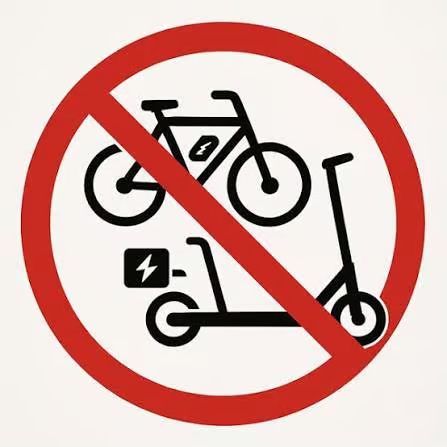
You own a condo in Toronto and rent it out.
Your tenant pays rent on time.
There have not been any major problems.
Then one day, you suddenly receive an email from condo management:
“Your unit is in violation of the building rules. Please stop storing or charging an e-bike inside the unit.”
There is only one problem:
You did not even know your tenant owned an e-bike.
You contact the tenant.
The tenant replies:
“It’s my personal property. I rent this unit. Why can’t I keep it inside?”
So what does the landlord do?
Can you simply tell condo management:
“That’s my tenant’s problem, not mine.”
And leave it there?
Not necessarily.
A Recent Toronto Condo Case Raised This Exact Issue
A recent case before Ontario’s Condominium Authority Tribunal involved a Toronto condo in East York.
The condo introduced a rule prohibiting certain electric mobility devices from being stored in units, parking spaces, lockers and common areas. It also prohibited charging those devices on the property.
A resident challenged the rule.
The tribunal ultimately found that the condo rule was not unreasonable and allowed it to remain in effect.
This does not mean every condo in Ontario now automatically bans e-bikes.
It also does not mean condo corporations can create any restriction they want.
Condo rules must still comply with Ontario’s Condominium Act and the corporation’s governing documents, and they must be reasonable.
So the real question is:
What are the rules in your building?
And more importantly:
What happens if your tenant refuses to follow them?
Why Are More Condos Paying Attention to E-Bikes?
One major reason is:
battery safety.
Toronto Fire Services has repeatedly warned residents about lithium-ion battery fires.
In 2024, Toronto Fire Services responded to 76 lithium-ion battery fires, an increase of 38% from 2023.
By July 2025, another 43 incidents had already been reported.
The City of Toronto has also warned that damaged, modified or improperly charged lithium-ion batteries can cause fires and, in some cases, explosions.
That is why some condo boards have started paying more attention to:
- E-bikes
- Electric scooters
- Battery storage
- Battery charging
For landlords, however, the complicated part is this:
The device belongs to the tenant.
But:
The condo unit belongs to you.
Renting a Condo Does Not Mean the Tenant Can Ignore Building Rules
This is one important difference between renting out a condo and renting out a detached house.
A condo tenant must follow more than just the residential lease.
They are also expected to comply with the condo corporation’s:
- Declaration
- By-laws
- Rules
The Condominium Authority of Ontario states that condo owners, residents and visitors must comply with the corporation’s governing documents and Ontario’s Condominium Act.
For landlords, there is another important point.
Under section 119 of the Condominium Act, landlords are expected to take reasonable steps to ensure their tenants and occupants comply with the Act and the condo corporation’s governing documents.
So if a tenant says:
“I’m the one breaking the rule, not the landlord.”
That does not necessarily mean the landlord can simply ignore the issue.
Condo Management Usually Sees the Unit Number First
Imagine your tenant brings an e-bike into the unit every day.
Condo management discovers it.
They send the first notice.
You receive the email.
You forward it to your tenant.
Your tenant replies:
“Okay.”
Two weeks later, management sees the same problem again.
Another email arrives.
If the landlord simply keeps saying:
“This is my tenant. Please deal with them directly.”
the issue may not disappear.
From the condo corporation’s perspective, the problem is associated with:
your unit.
If a tenant continues to ignore the Condominium Act or the building’s governing documents, the condo corporation may take further enforcement steps.
Depending on the issue, certain disputes may also end up before the Condominium Authority Tribunal.
That is why:
How the landlord responds to the first notice matters.
The First Warning Usually Is Not the Biggest Problem
The first condo notice may be relatively simple.
For example:
“Please remove items from the hallway.”
“Please stop storing prohibited items on the balcony.”
“Please do not park in the visitor area.”
“Please stop charging an e-bike inside the unit.”
The landlord contacts the tenant.
The tenant fixes the problem.
That may be the end of it.
But what if the tenant does not cooperate?
That is when a small problem can begin to grow.
A condo corporation may start with notices and follow-up.
If the issue continues, enforcement can escalate and may involve legal letters, tribunal proceedings, mediation, arbitration or court, depending on the type of dispute.
At that point, what started as one simple email becomes:
an ongoing management issue.
One of the Biggest Condo Landlord Risks: You May Not Know What Is Happening
Many landlords think:
The tenant pays rent on time.
There are no complaints.
Therefore:
“My rental property basically manages itself.”
But condo rentals are different.
A lot of important information may not go to the tenant first.
It may go directly to the owner.
For example:
- Building rule changes
- Tenant violation notices
- Noise complaints
- Parking issues
- Locker issues
- Pet-related issues
- Move-in or move-out bookings
- Elevator reservations
- Maintenance notices
- Fire inspections
- Insurance document requests
- Notices requiring access to the unit
If the landlord is busy, travelling often or living outside Canada, it is easy for something to happen like this:
Condo management has already sent two or three emails before the landlord notices.
By then, the issue may already be more complicated than it needed to be.
What Should a Landlord Do After Receiving a Tenant Violation Notice?
The first rule is simple:
Do not ignore it.
Start by confirming exactly what condo management says happened.
Then review the relevant condo rule.
Different buildings can have very different rules.
For example:
Condo A may allow something.
Condo B may restrict it.
Condo C may prohibit it entirely.
So just because:
“My friend’s condo allows it”
does not mean:
“My building must allow it too.”
Once you understand the rule, contact the tenant promptly.
Keep records of:
- When the notice was received
- When the tenant was contacted
- How the tenant responded
- Whether the issue was corrected
- Whether further follow-up was needed
If the issue becomes serious, keeps repeating or has already escalated to legal correspondence, appropriate legal advice may be necessary.
What If the Tenant Says, “Nobody Told Me About This Rule”?
This is very common.
Many condo rentals follow a simple process:
Lease signed.
Keys handed over.
Tenant moves in.
But no one really explains the building’s most important rules.
That can create problems later.
A condo tenant is still expected to comply with the Condominium Act and the building’s declaration, by-laws and rules.
That is why condo landlords should consider making important rules clear before or at the beginning of the tenancy.
For example:
- Pet restrictions
- Smoking rules
- Parking rules
- Moving procedures
- Noise rules
- Balcony restrictions
- Amenity rules
- E-bike or battery restrictions
This can reduce the chance of the tenant saying:
“I only found out after I moved in.”
Today It Is an E-Bike. Next Time It Could Be Something Completely Different.
This is why the real point of this article is not:
“Can you keep an e-bike inside a condo?”
That depends on the rules of the specific building.
The bigger issue is:
A rental condo does not automatically manage itself just because the tenant pays rent on time.
Today it could be an e-bike.
Next time it could be:
A tenant renting out the parking space.
Items being stored on the balcony.
Unauthorized locker use.
Repeated noise complaints.
A pet-rule violation.
Failure to reserve the elevator properly.
Or failure to cooperate with a required unit inspection.
Each issue may look small on its own.
But when no one follows up:
A small tenant issue can slowly become a landlord problem.
Topromanage Perspective
Many landlords think property management is mainly about:
collecting rent.
In reality, rent collection is often the easy part.
The things that actually take time are:
Receiving a condo notice.
Contacting the tenant.
Confirming what happened.
Explaining the rule.
Arranging follow-up.
Keeping records.
Then responding to condo management again.
A rental property may be quiet for months.
But once something happens, someone still needs to deal with it quickly.
This is especially true for condo rentals, because the landlord may need to manage both sides:
the tenant
and
the condo management office.
That is where professional property management can become valuable.
Not only after a problem becomes serious.
But when the problem first appears.
Who Is Managing These Issues for Your Rental Condo?
If your tenant pays rent on time, that is great.
But there are still a few questions worth asking:
Who sees condo management notices when they arrive?
Who contacts the tenant when there is a violation?
Who follows up when repairs are needed?
Who keeps dealing with the issue if the tenant does not respond?
Who handles these day-to-day matters when you are travelling or outside Canada?
If the answer to all of them is:
“I do.”
Then your rental property may not be as passive as it seems.
You are still the person who needs to step in whenever something happens.
Want Your Rental Property to Be More Hands-Off?
If you own a rental property in:
Toronto, Markham, Richmond Hill, Vaughan, Mississauga or elsewhere in the GTA,
Topromanage can assist with day-to-day tenant communication, rent management, maintenance coordination, condo management notices and other rental property management responsibilities.
You can start by telling us:
Property location + property type + whether the property is currently tenanted
We can help you understand which parts of your rental management could be handled professionally.
A rental property can be an investment.
It does not have to become your second job.

The Topromanage Experience
Discover decades of industry expertise that covers all of the GTA and Southern Ontario.



Scan A QR Code to Connect With Us
WeChat
WhatsApp