
July 21, 2026 | Blog
Toronto Tenants Hit With $400–$500 AC Charges: What Ontario Landlords Need to Know
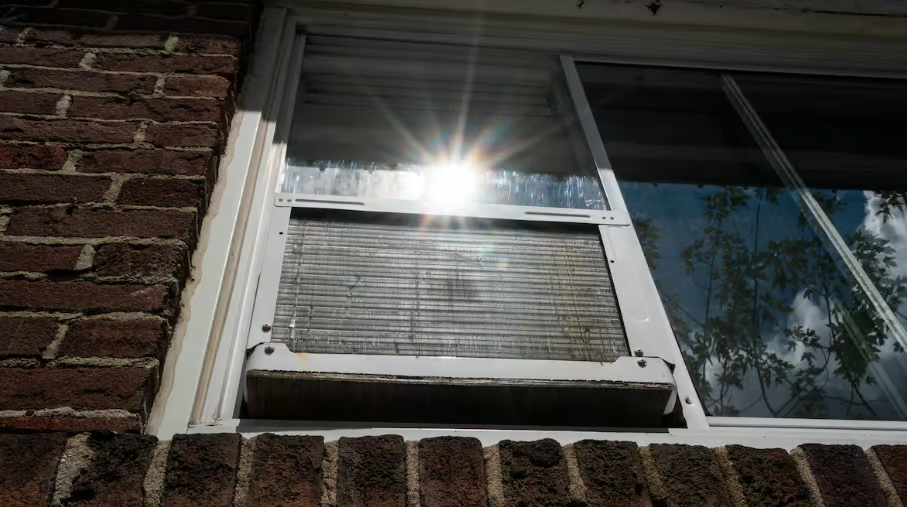
As Toronto faces longer and hotter summers, air conditioning is becoming increasingly important, especially for seniors and other vulnerable tenants.
However, a recent Toronto Star report has raised concerns about rental buildings charging tenants hundreds of dollars to operate their own air conditioners.
The report highlighted 68-year-old Grace Mitchell, who had used a window air conditioner in her apartment for more than a decade with permission from a former property manager.
She was later informed that tenants would need to pay a $400 seasonal AC charge.
Unable to afford the additional amount, Mitchell considered removing the unit—even though her family was concerned about the health risks of remaining in an extremely hot apartment.
Another Scarborough tenant, 70-year-old Khadijah Al-Maqdisy, reportedly received AC-related invoices reaching approximately $500.
These cases raise an important question:
Can Ontario landlords charge tenants any amount they choose for air conditioning?
The answer is no.
Ontario’s new rules allow some landlords to recover additional electricity costs, but the amount must be reasonable and connected to the actual cost of operating the air conditioner.
Why Are Tenants Receiving AC Charges?
Ontario introduced new rules for tenant-installed window and portable air conditioners effective July 1, 2026.
Where a landlord does not provide cooling, tenants may generally install a qualifying window or portable air conditioner when they meet the required notice, safety and property-protection conditions.
When electricity is included in rent, the landlord may be able to apply a seasonal rent increase to recover the additional electricity cost. The increase may only apply while the air conditioner is being used.
The rules are intended to balance two concerns:
- Tenants need access to cooling during extreme heat.
- Landlords who pay the electricity bill should not have to absorb every additional operating cost.
However, landlords are not permitted to create an arbitrary “summer AC fee.”
How Much Does It Cost to Run an Air Conditioner?
The Toronto Star report cited Toronto Hydro’s estimate that operating a typical window air conditioner for approximately eight hours per day could cost around $30 per month, depending on the appliance, electricity plan and time of use.
Using that estimate as a general example:
- Three months: approximately $90
- Four months: approximately $120
- Five months: approximately $150
The actual amount may vary depending on:
- The air conditioner’s wattage
- Energy efficiency
- Daily operating hours
- Number of months used
- Electricity pricing plan
- Number of units in the apartment
Toronto Hydro offers different residential pricing structures, and electricity rates can vary significantly depending on when power is used.
This helps explain why a flat fee of $400 or $500 may be questioned when the landlord does not provide a clear calculation.
When Can a Landlord Charge Extra?
A seasonal AC increase may generally apply when:
- The tenant installs a window or portable air conditioner.
- Electricity is included in the rent.
- The unit was installed and used on or after July 1, 2026.
- The lease does not already allow AC use without an increase.
- The amount reflects the additional electricity cost.
- The charge applies only during the months the AC is used.
The presence of an air conditioner alone does not automatically give the landlord the right to charge a fee.
The landlord should first review the lease, utility arrangement and installation date.
What If the Tenant Pays Their Own Electricity?
When the tenant has their own electricity account and pays the utility provider directly, the tenant is already covering the cost of operating the air conditioner.
In that situation, the landlord would generally not have the same basis to impose an additional electricity-related AC charge.
Before charging anything, landlords should confirm:
- Who receives the electricity bill
- Whether electricity is included in rent
- Who owns the air conditioner
- Whether cooling is already included as a service
- What the lease says about AC use
The Charge Must Reflect the Electricity Cost
Landlords cannot simply decide that every tenant must pay $400 or $500.
The seasonal increase should be based on the actual electricity cost or a reasonable estimate.
A calculation may consider:
- Appliance wattage
- Expected operating hours
- Number of days used
- Current electricity rates
- Energy-efficiency information
The tenant may be required to provide available information about the appliance and expected usage. Ontario’s policy framework specifically connects the landlord’s recovery to actual or reasonably estimated electricity costs.
A landlord should retain the calculation and explain it clearly to the tenant.
Can Every Tenant Be Charged the Same Amount?
A one-size-fits-all charge may be difficult to justify.
One tenant may operate a small, energy-efficient unit for four hours per day, while another tenant may use an older, larger model for most of the day.
Their electricity costs would not necessarily be the same.
A standardized fee becomes especially risky when it is much higher than the likely operating cost of the tenant’s specific appliance.
The estimate does not have to be perfect, but it should be reasonable, transparent and supported by information.
The Charge Must End When AC Use Ends
A seasonal AC increase is temporary.
For example:
- Regular monthly rent: $2,000
- Seasonal AC increase: $25
- Rent while AC is used: $2,025
- Rent after AC use ends: $2,000
The landlord cannot continue collecting the additional amount throughout the winter.
When the tenant stops using the unit, the rent must decrease by the same amount. The seasonal increase may be applied again when use resumes in a later year, provided the legal conditions are still met.
What About Air Conditioners Used for Many Years?
This is one of the most important issues in Grace Mitchell’s case.
She had reportedly used the same air conditioner for more than a decade with permission from previous management.
Ontario’s new seasonal rent-increase rule specifically addresses qualifying window or portable air conditioners installed and used on or after July 1, 2026.
Before applying a new charge to a longstanding unit, landlords should review:
- The original lease
- Previous written permission
- The installation date
- Past payment arrangements
- Whether electricity was always included
- Whether AC use had previously been accepted without an extra fee
A new property manager does not automatically erase the history of an existing tenancy.
Longstanding arrangements may require individual legal review.
Can a Landlord Ban Air Conditioners?
A broad lease clause banning every window or portable air conditioner may not override the tenant’s rights under the new rules.
However, tenants must still install and maintain the equipment safely.
A landlord may have a legitimate concern if the unit:
- Is not securely installed
- Causes water damage
- Overloads the electrical system
- Damages the window
- Blocks an emergency exit
- Violates applicable building or safety requirements
The objection should be based on a real safety, legal or property concern—not simply a preference against air conditioning.
Can the Landlord Inspect the Unit?
Yes. A landlord may inspect a tenant-installed air conditioner to check whether it is safe, secure and causing damage.
The landlord must still follow Ontario’s legal entry requirements, including proper written notice where required.
A useful inspection record should include:
- Equipment type
- Installation method
- Photographs
- Window condition
- Drainage concerns
- Electrical concerns
- Any corrective work required
Common Mistakes Landlords Should Avoid
Landlords should avoid:
- Charging an unexplained flat fee
- Charging when the tenant pays electricity directly
- Using the same amount for every tenant
- Continuing the charge throughout the year
- Ignoring the installation date
- Ignoring previous permission
- Treating the charge as additional profit
- Adding a disputed amount to rent arrears without confirming that it is valid
An incorrect rent calculation could create problems in a later Landlord and Tenant Board proceeding.
What Should Landlords Do Before Charging?
Before applying a seasonal AC increase:
- Review the lease.
- Confirm who pays electricity.
- Determine when the unit was installed.
- Review any previous permission.
- Obtain appliance information.
- Confirm the expected period of use.
- Calculate the additional electricity cost.
- Explain the amount in writing.
- Apply the charge only during AC use.
- Remove it when seasonal use ends.
A consistent process helps reduce misunderstandings and protects the landlord if the charge is challenged.
Topromanage’s Perspective
The Toronto Star report shows how quickly a potentially valid cost can turn into a serious dispute when the amount is unclear.
Landlords may reasonably recover eligible electricity costs when utilities are included in rent. However, a $400 or $500 charge should not appear without a transparent explanation.
Professional property management should include:
- Reviewing the lease and tenancy history
- Confirming utility responsibility
- Documenting existing AC arrangements
- Checking installation safety
- Calculating reasonable costs
- Providing clear written notice
- Updating the rent ledger correctly
- Ending the charge when AC use stops
At Topromanage, we help GTA landlords maintain clear tenant communication, accurate records and consistent rental procedures.
The goal is not simply to charge a fee. Any amount collected should be lawful, reasonable and supported by documentation.
Final Thoughts
Ontario landlords may be permitted to recover the electricity cost of a tenant-installed air conditioner when electricity is included in rent.
But the charge cannot be random.
It should:
- Reflect the actual or reasonably estimated electricity cost
- Apply only during the period of use
- Stop when AC use ends
- Respect the lease and tenancy history
- Be supported by written records
For landlords, a clear calculation and consistent process can help recover legitimate costs without creating unnecessary disputes.
Source: Toronto Star

The Topromanage Experience
Discover decades of industry expertise that covers all of the GTA and Southern Ontario.



Scan A QR Code to Connect With Us
WeChat
WhatsApp