
July 3, 2026 | Blog
Canada Rental Report: June 2026 Market Update
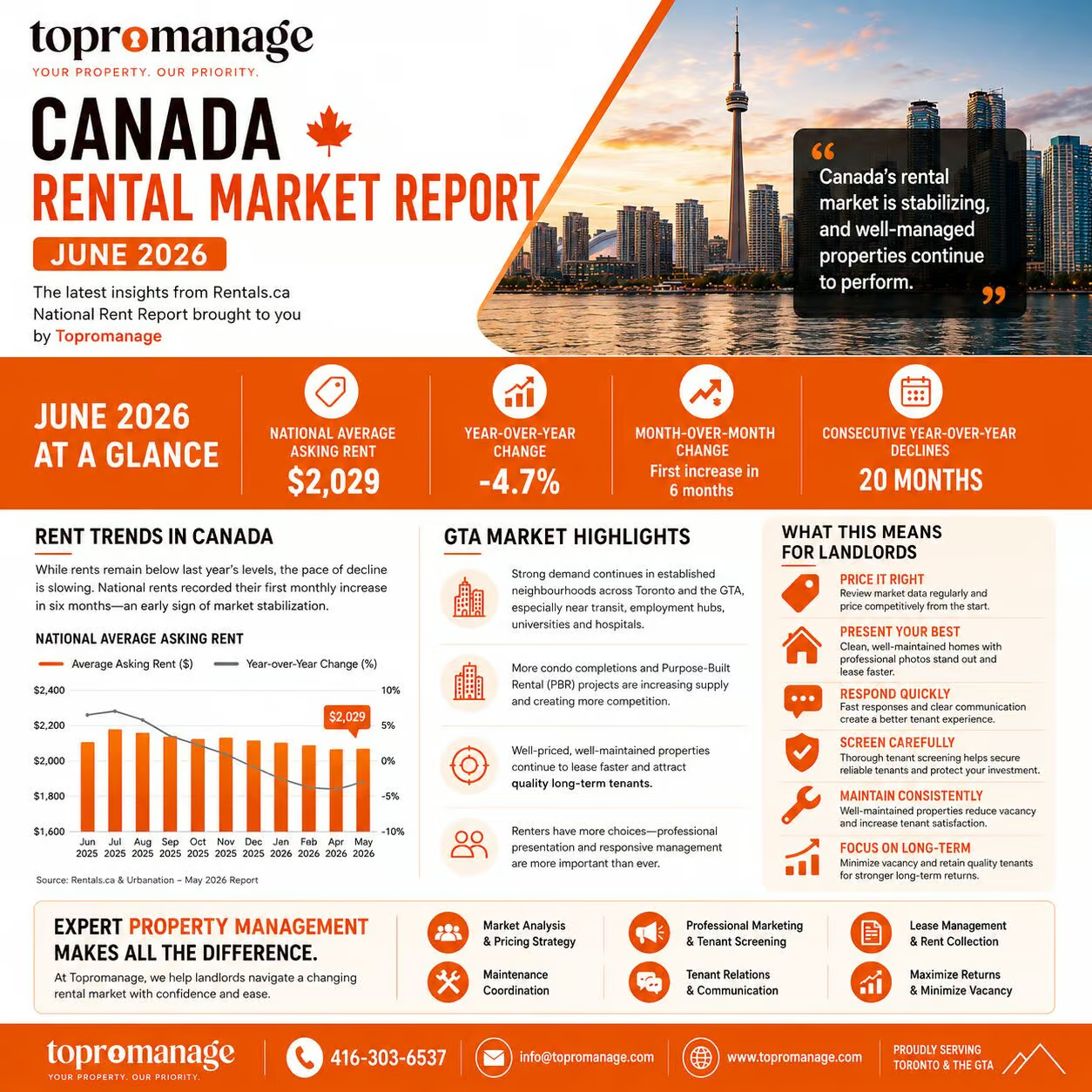
According to the latest Rentals.ca National Rental Report, Canada’s average asking rent reached $2,029 in May 2026, representing a 4.7% year-over-year decline and marking the 20th consecutive month of annual rent decreases. At the same time, asking rents increased slightly compared with April—the first monthly increase in six months.
These numbers may seem contradictory, but together they tell an important story:
Canada’s rental market isn’t weakening—it is becoming more balanced.
For landlords across Toronto and the GTA, this means success is becoming less about simply owning a rental property and more about how well that property is managed and positioned within an increasingly competitive market.
June 2026 Market Snapshot
Here are some of the biggest highlights from this month’s report:
- National average asking rent: $2,029
- Year-over-year change: -4.7%
- Month-over-month change: First increase in six months
- Annual rent declines: 20 consecutive months
Although rents remain below last year’s levels, the pace of decline appears to be slowing.
Instead of another sharp correction, the market may be entering a period of stabilization.
For landlords, this is an encouraging sign.
Why Are Rents Still Lower Than Last Year?
Canada experienced extraordinary rental growth between 2022 and 2024.
Strong immigration, limited housing supply, and rising demand pushed asking rents to record highs.
Today’s market looks very different.
Several factors have increased rental supply:
- Thousands of newly completed condominium units have entered the rental market.
- More Purpose-Built Rental (PBR) communities have opened.
- Rental inventory has expanded across many major cities.
- Renters now have significantly more choices than they did two years ago.
This increased supply has naturally placed downward pressure on asking rents.
However, this should not be mistaken for weak rental demand.
Instead, it represents a market returning to a healthier balance between landlords and tenants.
Purpose-Built Rentals Continue to Change the Market
One of the most important long-term trends is the continued growth of Purpose-Built Rental (PBR) developments.
Unlike condominiums owned by individual investors, these buildings are professionally managed by a single owner and often offer amenities such as:
- Fitness centres
- Coworking spaces
- Pet facilities
- Resident lounges
- Online maintenance requests
- On-site management teams
As more of these projects enter the market, tenants have more professionally managed housing options than ever before.
This creates additional competition for privately owned condo rentals.
That does not mean condo investments no longer work—it simply means landlords must compete on more than price.
Toronto & GTA Continue to Stand Out
While national statistics are important, real estate is always local.
Across the GTA, rental demand remains strongest in established communities with:
- Excellent transit access
- Strong employment centres
- Universities and hospitals
- Mature neighbourhood amenities
Areas such as:
- Downtown Toronto
- North York
- Markham
- Richmond Hill
- Vaughan
continue attracting steady demand from:
- Young professionals
- Healthcare workers
- Technology employees
- International students
- New immigrants
Location continues to be one of the strongest long-term advantages a rental property can have.
Today’s Market Is More Competitive—Not Necessarily Weaker
Many landlords immediately assume that lower rents mean weaker demand.
In reality, today’s market is better described as more competitive.
Tenants now have:
- More listings to compare
- More negotiating power
- More time to make decisions
As a result, landlords need to work harder to make their properties stand out.
This doesn’t necessarily mean lowering rent dramatically.
Instead, success increasingly depends on offering a better overall rental experience.
What Makes a Property Lease Faster Today?
Properties that continue to perform well generally have several things in common:
- Realistic pricing
- Clean and well-maintained interiors
- Professional photography
- Functional layouts
- Convenient locations
- Quick communication
- Flexible showing schedules
In today’s market, renters compare dozens of listings before making a decision.
Small improvements can make a significant difference in reducing vacancy.
Should Landlords Lower Rent?
Not always.
One of the biggest mistakes landlords make is focusing only on achieving the highest possible monthly rent.
A property that sits vacant for six weeks often costs more than adjusting rent slightly and securing a qualified long-term tenant sooner.
Rather than asking:
“How much can I charge?”
Landlords should ask:
“How can I lease this property quickly to a quality tenant?”
Long-term occupancy usually produces stronger investment returns than holding out for a slightly higher asking rent.
Property Management Matters More Than Ever
As rental competition increases, professional property management becomes increasingly valuable.
Today’s landlords benefit from much more than rent collection.
Professional property management includes:
- Rental pricing analysis
- Market trend monitoring
- Professional marketing
- Tenant screening
- Lease administration
- Maintenance coordination
- Tenant communication
- Vacancy reduction strategies
Good management can often improve returns without increasing rent.
Topromanage’s Monthly Insight
One important takeaway from this month’s report is that market conditions are becoming more selective.
Properties that are:
- Properly priced
- Professionally presented
- Well maintained
- Located in desirable neighbourhoods
continue attracting quality tenants.
Meanwhile, properties with unrealistic pricing or poor presentation are remaining on the market longer than they did two years ago.
For landlords, the focus should shift from maximizing rent to maximizing occupancy and tenant quality.
Looking Ahead
As we move into the second half of 2026, several trends will likely continue:
- More newly completed rental housing entering the market
- Stable but competitive rental conditions
- Continued demand in Toronto’s strongest neighbourhoods
- Greater importance placed on pricing strategy and property presentation
While we may not return to the rapid rent growth experienced in 2022, the outlook for well-managed rental properties remains positive.
Final Thoughts
June’s rental report reinforces a message we’ve been seeing throughout the year:
Canada’s rental market is adjusting—not collapsing.
For landlords, today’s environment requires a different strategy than it did just a few years ago.
Success is no longer measured by asking the highest rent.
It is measured by:
- Minimizing vacancy
- Attracting reliable tenants
- Maintaining the property
- Adapting to changing market conditions
At Topromanage, we believe informed landlords make better investment decisions.
That’s why we’ll continue sharing monthly rental market updates to help GTA property owners stay ahead of changing market conditions and protect the long-term performance of their rental investments.
Source: Rental.ca

The Topromanage Experience
Discover decades of industry expertise that covers all of the GTA and Southern Ontario.



Scan A QR Code to Connect With Us
WeChat
WhatsApp