
April 6, 2026 | Blog
Permit Approved Does Not Mean Move-In Ready: What Ontario Landlords Need to Know About Building Inspections
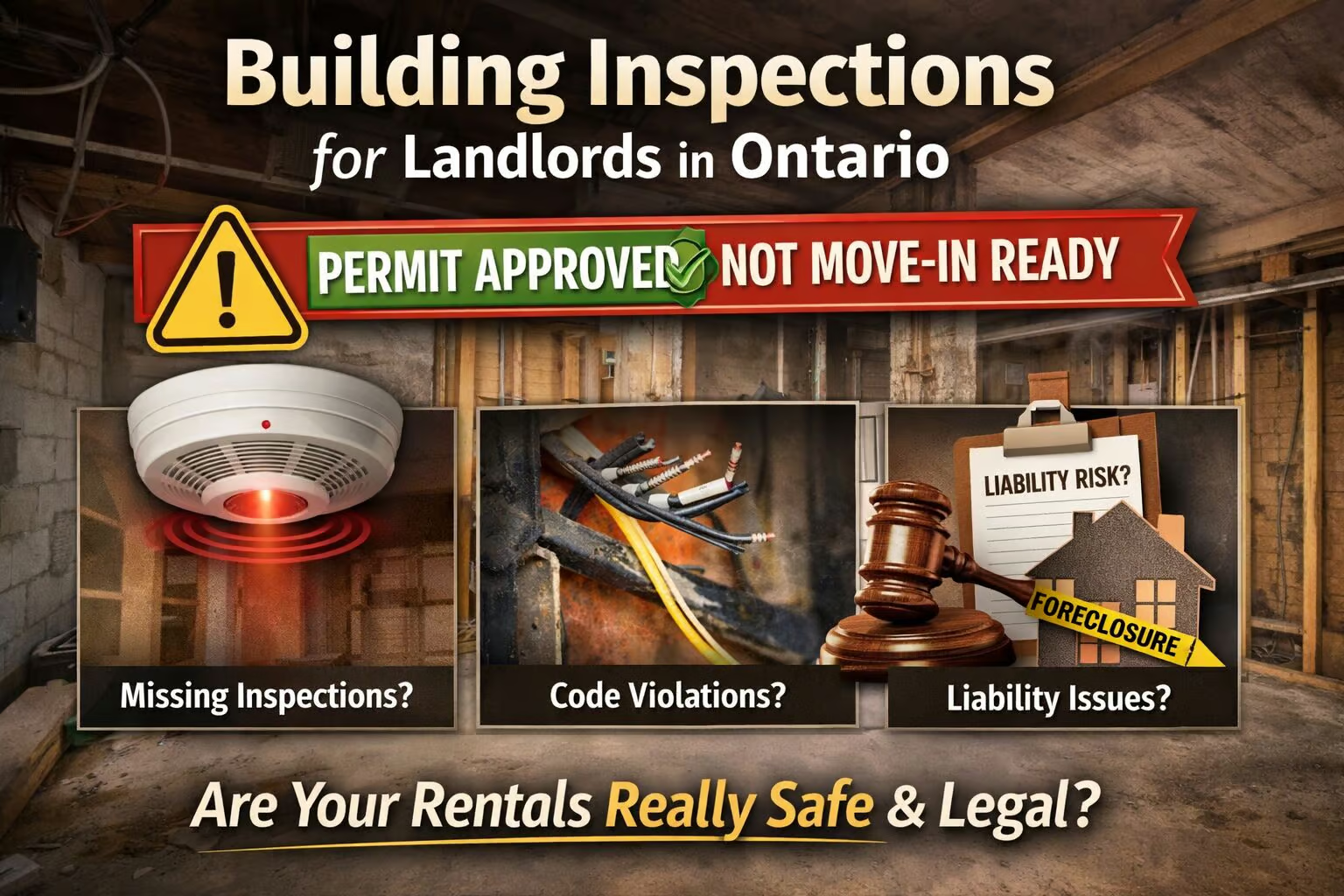
For many landlords, getting a building permit feels like the main hurdle. Once the permit is approved, it is easy to assume the work can move forward and the unit will eventually be ready to rent.
But in Ontario, a permit is not the same thing as final approval for occupancy. Building inspections are a separate and essential part of the process, and missing them can create serious safety, legal, and financial risks.
That difference became much more visible after a fatal house fire on Banas Way in Brampton in November 2025. Global News reported that the property owner had applied for a permit to construct a second unit, and city officials said they had attempted to inspect the property multiple times and had issued an order requiring changes.
The Key Difference Between a Permit and an Inspection
A permit allows work to begin. It does not confirm that the work was completed properly or that the space is safe to occupy.
Inspections are the checkpoints that confirm whether construction was done according to code and whether the unit meets safety requirements before occupancy. In practice, those inspections may cover structural work, plumbing, electrical systems, fire separation, exits, smoke alarms, and carbon monoxide protection, depending on the project and stage of construction.
This is why a permit on its own should never be treated as the final step.
Why This Matters for Landlords
The Brampton case is a reminder that compliance problems do not stay paperwork issues for long. Once a property is rented, any missed inspection, unfinished requirement, or unresolved order can turn into a much larger risk.
Global News reported that Brampton’s mayor said the owner had submitted a request for a permit to construct a second unit and that the city had tried multiple times to inspect the property, leading to an order requiring changes. A Brampton bylaw official also said the city was in the middle of enforcing those orders and working with the landlord on the secondary unit when the fire happened.
Even where facts are still disputed after an incident, the larger lesson remains the same: landlords should not assume that permit approval alone means the unit is fully compliant or ready for occupancy.
Common Misunderstandings Landlords Make
One common misunderstanding is thinking that permit approval automatically means the renovation is complete from a legal standpoint. It does not.
Another is assuming that if the work looks finished, the compliance process is finished too. Municipal inspections exist precisely because appearance is not the same as code compliance.
A third is failing to keep clear records of inspection stages, correction notices, and final sign-offs. If there is ever a dispute, an insurance issue, or an enforcement question, documentation matters.
The Real Risks of Missing Inspections
When building inspections are skipped, delayed, or never completed, the consequences can extend far beyond municipal paperwork.
Landlords may face:
- increased liability exposure
- delays in renting or re-renting the unit
- enforcement orders or additional compliance costs
- insurance complications
- major safety risks for occupants
The Brampton fire drew public attention because it involved severe loss of life and injury. Peel police and fire officials said multiple people were killed or seriously injured, and investigators had to search through a heavily damaged structure after the blaze.
A case like that is extreme, but it shows why compliance should be treated as part of risk management, not just construction administration.
What Landlords Should Do Before Renting a Renovated Unit
Landlords who renovate a property, add a secondary suite, or convert space for rental use should make sure the process is complete before occupancy.
That means confirming:
- the correct permit was obtained
- required inspections were scheduled and completed
- any deficiency orders were resolved
- the final approval or occupancy-related requirements were satisfied
- all records were retained
In other words, the work is not truly finished until both the construction and the compliance process are complete.
Why This Is Also a Property Management Issue
This is one of the biggest reasons professional oversight matters. Property management is not only about rent collection and tenant communication. It also includes reducing preventable risk before a problem becomes expensive or irreversible.
A missed inspection may not seem urgent when everything appears quiet. But once a unit is occupied, that oversight can become much more serious.
Final Thoughts
The lesson for Ontario landlords is simple: a permit is the beginning of the compliance process, not the end of it.
If you are building, renovating, or legalizing a rental unit, building inspections should never be treated as optional or secondary. They are one of the key steps that help protect the property, the tenancy, and most importantly, the safety of the people living there.

The Topromanage Experience



Scan A QR Code to Connect With Us
WeChat
WhatsApp